

Treating Ankle Injuries in Breda and Bavel
Recovery from a Sprained Ankle, Torn Ankle Ligament, or Syndesmotic Injury
Specialized Treatment and Rehabilitation for Ankle Injuries in Breda and Bavel
Did you twist your ankle while exercising, step off a curb the wrong way, or land awkwardly after a jump? An ankle injury can cause pain, swelling, and uncertainty about what you can still do—all within seconds.
Sometimes it’s just a mild ankle sprain. In more serious injuries, an ankle ligament may be partially or completely torn. Without a proper diagnosis and active rehabilitation, ankle instability, recurring sprains, and long-term ankle problems can develop.
At Helix Physical Therapy in Breda and Bavel, we’ll help you with a specialized assessment and a personalized treatment plan. Our goal isn’t just to relieve your pain, but to help you regain full confidence in your ankle during work, sports, and daily activities.
From our practice in Bavel, we work daily with athletes and active (young) adults from Breda, Bavel, Ulvenhout, Gilze, Oosterhout, and the surrounding area to help them recover from ankle injuries.
Are you unsure how serious your ankle injury is?
Have your injury assessed and get a clear understanding of the injury and the steps toward recovery.
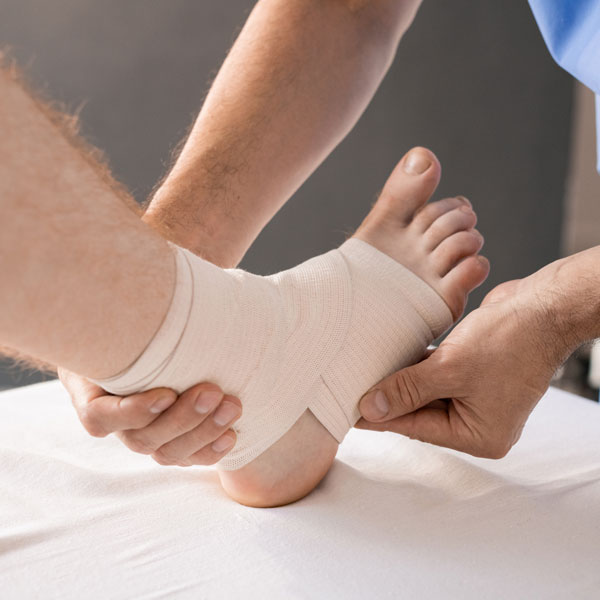
What types of ankle injuries do we treat?
At Helix, we treat, among other things:
- Sprained Ankle
- Distortion only
- Ankle Sprain
- Partial or complete tear of the ankle ligament
- Recovery from a Torn Ankle Ligament
- Syndesmotic injury or high ankle sprain
- Ankle Instability
- Chronic Ankle Problems
- Ankle injury while running
- Ankle Injury During Soccer
- Ankle Cartilage Injury
- Going through the ankle again
Recovery from a Torn Ankle Ligament
With a torn ankle ligament, recovery depends on the severity of the injury, the stability of the ankle, and the level of activity you want to return to. Just because you can walk again doesn’t automatically mean your ankle has fully healed.
During recovery from a torn ankle ligament, we focus on reducing pain and swelling, restoring ankle mobility, and rebuilding strength, balance, and stability. For athletes, we then incorporate jumping, landing, and twisting movements.
Recovery from a torn ankle ligament takes, on average, several weeks to a few months. In cases of a completely torn ankle ligament, a syndesmotic injury (also known as a ligament injury or high ankle sprain), or chronic ankle instability, rehabilitation may take longer.
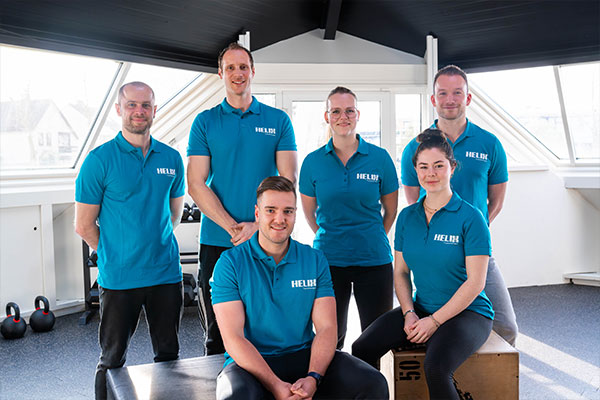
Why Use Helix for Ankle Injuries?
One of the reasons ankle injuries sometimes persist for a long time is that the severity of the injury is not always properly assessed.
At Helix, we therefore place a strong emphasis on specialized diagnostics. We not only examine the ankle ligaments themselves, but also look at the surrounding structures that play an important role in recovery.
1267+
Successful trajectories
97%
Customer Satisfaction
100%
Aftercare
Syndesmosis Injury: An Ankle Injury That Is Often Overlooked
In some ankle injuries, not only is the ankle ligament damaged, but the syndesmosis is as well. This is the strong connection between the tibia and the fibula.
A syndesmotic injury is often caused by high torsional forces during sports and is frequently overlooked during the initial assessment. However, research shows that these injuries, in particular, can have a major impact on recovery and the likelihood of long-term symptoms.
That is why we pay close attention to identifying this injury during our initial consultation. Thanks to our close working relationship with orthopedic specialists in the region, we can act quickly if additional testing or a referral is needed.
In addition, we are involved in advancing research on the role of syndesmotic injuries in ankle injuries, so that we can continue to improve our diagnostic methods and treatment.
Not every ankle ligament injury is the same
An irritated ankle ligament requires a different approach than a partially or completely torn ankle ligament.
The difference between these injuries determines:
- The expected recovery time
- The Training Program
- The potential tax burden
- The risk of instability
- The risk of future cartilage damage
An accurate diagnosis during the initial phase of recovery is therefore the foundation for successful rehabilitation.
Our Approach: Active Recovery Starting on Day One
We don’t believe in waiting for weeks on end.
As soon as your injury allows, we’ll begin an active treatment plan aimed at restoring full function to your ankle.
Our goal is not only to relieve your pain, but above all to help you regain full confidence in your ankle during work, sports, and daily activities.
Our Treatment for an Ankle Injury
Step 1: Comprehensive intake and assessment
During the first appointment, we’ll assess:
- How the injury occurred
- Which structures are involved
- The degree of instability
- Swelling and Limited Range of Motion
- Loss of strength
- Balance and Coordination
Based on this, we will develop a personalized treatment plan.
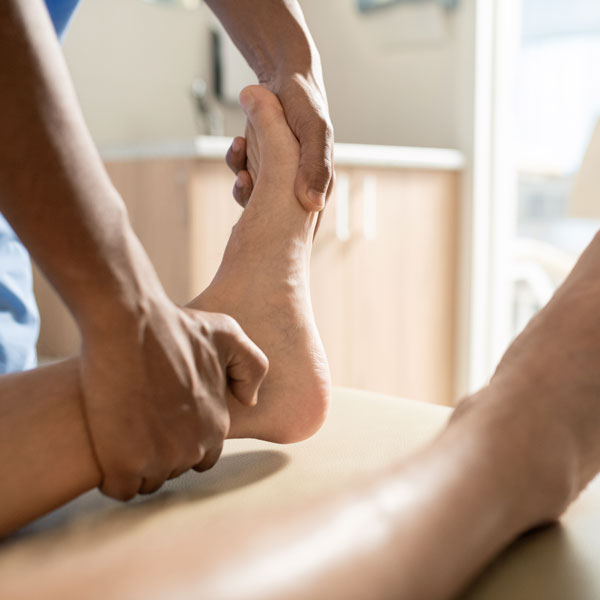
Step 2: Restoring Mobility and Functional Capacity
In the first phase, we will focus on:
- Pain Relief
- Reducing swelling
- Restoring Range of Motion
- Normalizing the Gait Pattern
Step 3: Building Stability and Strength
Next, we’ll work on:
- Ankle Stability
- Strength Around the Ankle
- Calf Strength
- Balance Sheet
- Responsiveness
- Control While Moving
Step 4: Functional Training
As the recovery progresses, we are working toward:
- Running
- Jumping
- Turning and Rotating Movements
- Sport-Specific Exercises
- Game Situations
Step 5: Safe Return to Sports
Before you fully return to your sport, we’ll test whether your ankle can handle the strain.
This significantly reduces the risk of a new injury.
Why do ankle injuries often recur?
Many people still experience symptoms months or even years later.
This is often because:
- Stability has not been sufficiently restored
- The balance sheet has not been fully returned
- There is a missed syndesmotic injury
- The exercise intensity has increased too quickly
- The ankle has never fully recovered
That is precisely why we focus on full recovery and not just on pain relief.
Frequently Asked Questions
How long does it take to recover from a torn ankle ligament?
Recovery from a torn ankle ligament often takes about 8 to 16 weeks. The exact duration depends on the severity of the injury, the stability of the ankle, and the activities or sports you want to return to.
How do I know if my ankle ligament is torn?
A torn ankle ligament can cause pain, swelling, bruising, and instability. The symptoms alone do not always indicate the severity of the injury. A physical therapy evaluation helps assess the affected structures and the stability of the ankle.
What is an ankle sprain?
An ankle sprain is an injury in which the ankle ligaments are stretched or damaged. The severity ranges from mild discomfort to a partial or complete tear of an ankle ligament.
Why is my ankle still unstable?
After an ankle injury, strength, balance, coordination, and reaction time may not fully recover. As a result, the ankle may feel unstable or frequently give way.
When can I start running again?
You can gradually start running once walking is going well and your mobility, strength, and stability have recovered sufficiently. The progression depends on the severity of the ankle injury and how you respond to the strain.
Will taping my ankle help?
Taping the ankle can provide temporary additional support during the acute phase or when returning to sports. Tape is not a substitute for a full rehabilitation program. Click here for the blog post “Ankle Taping.”
Schedule an appointment for your ankle injury
Have you suffered an ankle injury, do you continue to experience pain from a previous ankle injury, or do you frequently twist your ankle?
The specialists at Helix Physical Therapy will help you with a clear diagnosis, a personalized treatment plan, and an active rehabilitation program focused on long-term recovery.
Schedule your initial consultation today at Helix Physical Therapy in Bavel and take the first step toward a strong, stable, and resilient ankle.
