

Rehabilitation After Ankle Surgery
Specialized rehabilitation following ankle surgery in Breda and Bavel
An ankle surgery is often an important step toward recovery. However, it is not the surgery itself, but the rehabilitation that follows, that largely determines how well you ultimately recover.
Whether you’ve had surgery for a torn ankle ligament, a syndesmotic injury, an ankle fracture, a cartilage injury, or chronic ankle instability: without a well-structured rehabilitation program, there remains a risk of stiffness, loss of strength, instability, and recurring symptoms.
At Helix Physical Therapy, we support people every day as they recover from ankle surgery. From our practice in Bavel, we help patients from Breda, Oosterhout, Ulvenhout, Gilze, and the rest of the region safely return to work, sports, and daily activities.
Our goal is simple: not just to recover from the surgery, but to be able to fully rely on your ankle again.
What types of ankle surgeries does Helix offer?
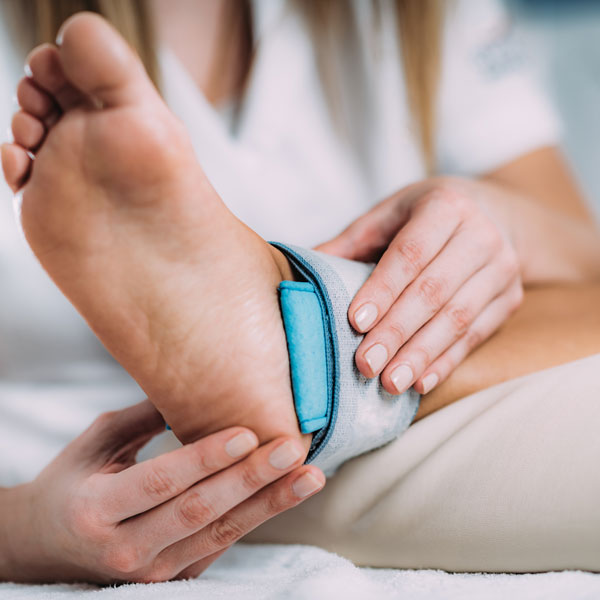
We provide care for patients following, among other things:
- Ankle Ligament Reconstructions
- Syndesmosis Surgeries
- Surgery Following Ankle Fractures
- Ankle Cartilage Surgery
- Ankle Arthroscopies Only
- Surgery for Chronic Ankle Instability
- Osteochondral defects of the ankle
- Ankle Correction Surgery
- Ankle Prostheses
- Ankle Arthrodesis (Fusion of the Ankle)
Did you have a serious ankle injury but didn’t undergo surgery? If so, be sure to check out our page on ankle injuries, where we discuss ankle ligament injuries, syndesmotic injuries, and sports rehabilitation in more detail.
Why choose Helix after ankle surgery?
An ankle surgery is never a standard procedure.
Every surgery has its own protocol, every patient recovers differently, and every sport places different demands on the ankle. That is why we do not believe in standard rehabilitation programs.
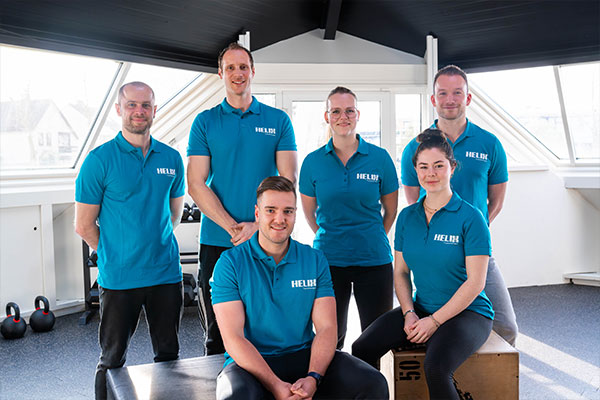
At Helix, we combine specialized physical therapy, sports rehabilitation, and training guidance into a single, integrated recovery program.
1267+
Successful trajectories
97%
Customer Satisfaction
100%
Aftercare
Specialized knowledge of ankle injuries
Our expertise in ankle rehabilitation doesn’t begin only after surgery.
Every year, we treat many patients with acute and chronic ankle injuries and have extensive experience with:
- Ankle Ligament Injuries
- Syndesmotic Injuries
- Chronic Ankle Instability
- Sports-Related Ankle Injuries
- Recurrent Ankle Sprains
As a result, we not only understand what was repaired during the surgery, but also—and more importantly—what factors caused the injury in the first place.
This helps us not only treat the effects of the surgery, but also address the underlying cause.
Read more here about our approach to ankle injuries.
Close collaboration with orthopedic surgeons and sports medicine specialists
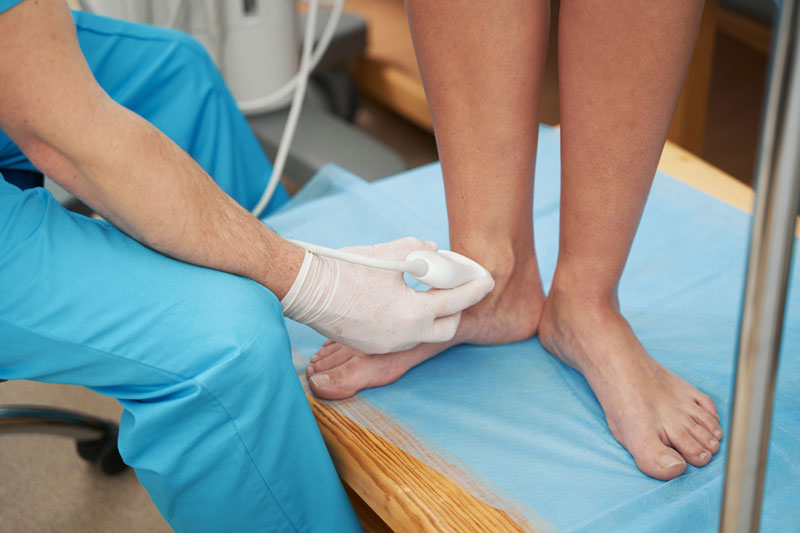
To ensure the best possible recovery, we work closely with the orthopedic surgeons at Amphia Hospital and Bergman Clinics.
In addition, we maintain close contact with the sports medicine physicians at Amphia Hospital.
This allows us to act quickly when additional diagnostics, consultation, or adjustments to the treatment plan are needed.
This collaboration ensures that surgery, medical care, and physical therapy rehabilitation are seamlessly coordinated.
For you, this means one team with one shared goal: to recover as fully as possible.
Rehabilitation According to the Principles of Frans Bosch
Throughout the entire rehabilitation process, we apply the principles of Frans Bosch Training & Coaching.
This approach to exercise is applied worldwide in elite sports and is, among other things, an important part of physical training in professional soccer. Feyenoord’s performance staff also works with these principles, and they are applied by a large number of Dutch elite athletes and Olympians.
But in the end, it’s not about elite sports.
It’s all about you.
The strength of this method lies in training movements just as the body actually uses them during sports, work, and daily activities.
Instead of just building muscle strength, we focus on:
- Quality of Movement
- Coordination
- Timing
- Stability
- Inspection
- Load Capacity
As a result, you’ll not only learn to move again, but you’ll also end up moving better and more efficiently than before.
The Rehabilitation Process After Ankle Surgery
Phase 1: Protect and Restore
Immediately after surgery, the focus is on:
- Wound Healing
- Reduce Swelling
- Pain Management
- Safe load
- Muscle Activation
During this phase, we closely follow the operator’s guidelines.
Phase 2: Regaining Mobility
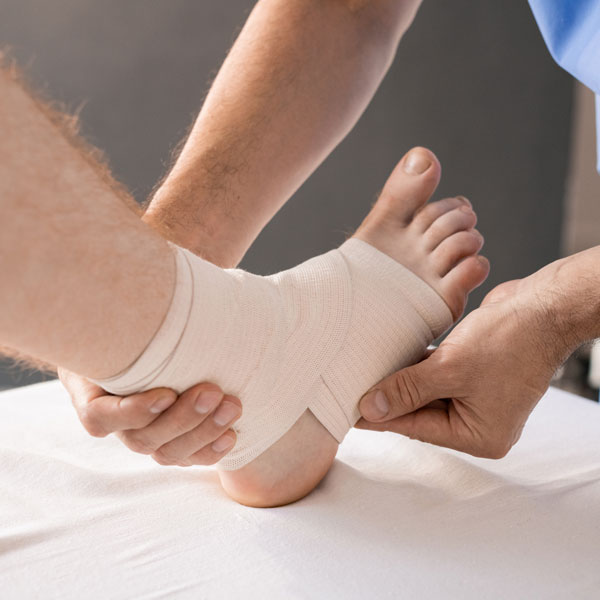
After a period of immobility, stiffness often develops in the ankle.
That is why we are working on:
- Freedom of Movement
- Gait Pattern
- Ankle Mobility
- Foot Mobility
Good mobility forms the foundation for all subsequent phases of rehabilitation.
Phase 3: Building Strength and Stability
Next, we’ll focus on:
- Calf Strength
- Ankle Stability
- Balance Sheet
- Coordination
- Responsiveness
It is precisely during this phase that we continue to build on the principles we also apply in our treatment programs for ankle injuries.
This helps reduce the risk of recurring instability or new injuries.
Phase 4: Functional Movement
Once your ankle can handle enough stress, we’ll gradually work our way up to the activities that are important to you.
Consider:
- Hiking
- Climbing Stairs
- Running
- Turning and Rotating Movements
- Sport-Specific Training
In this process, we are increasingly making the transition from physical therapy to functional training.
Phase 5: Return to Sports
For athletes, rehabilitation doesn’t end as soon as the pain goes away.
Before you fully resume sports, we will assess the following, among other things:
- Differences in Strength
- Stability
- Jumping Ability
- Agility
- Load Capacity
This way, we reduce the chance that you’ll suffer another ankle injury.
Why do symptoms sometimes persist after ankle surgery?
Many people think that surgery automatically leads to a full recovery.
Nevertheless, we regularly see that complaints persist due to:
- Insufficient power build-up
- Residual instability
- Mobility limitations
- Loss of coordination
- Fear of putting full weight on the ankle
- Returning to sports too soon
That is why we look beyond just the healing of the operated tissue.
We want your ankle to regain its full strength so you can participate in the activities that are important to you.
Frequently Asked Questions
How long does recovery take after ankle surgery?
Depending on the type of surgery, full recovery takes an average of 3 to 12 months.
When will I be able to walk again?
This varies depending on the surgery. We always follow the surgeon’s protocol and gradually increase the workload.
When can I start exercising again?
That depends on the type of surgery, your recovery, and the physical demands of the sport. Contact sports generally require more preparation than walking or biking.
Does physical therapy still make sense if my surgery was months ago?
Yes. Even when symptoms have persisted for some time, we can often still achieve significant improvements in strength, stability, and endurance.
Reimbursement for Physical Therapy After Surgery
In the Netherlands, after ankle surgery, you are often entitled to reimbursement for physical therapy under your basic health insurance. However, this applies only if your condition or surgery meets the government’s criteria and falls under what are known as “chronic indications.” Your physical therapist and treating physician can assess whether this applies to your situation.
How does the reimbursement work?
If your rehabilitation falls under the chronic care coverage, the first 20 physical therapy sessions are not covered by basic health insurance. You’ll have to pay for these sessions yourself or—if you have coverage for them—they’ll be reimbursed through your supplemental health insurance. Starting with the 21st session, the sessions are covered by basic health insurance, as long as you meet the criteria for the chronic condition and the maximum treatment period has not yet expired. For many surgeries involving the musculoskeletal system, the treatment period is limited to a maximum of one year following the surgery date.
Keep the deductible in mind
Physical therapy covered by basic insurance is subject to the mandatory deductible. If you haven’t yet used up your entire deductible for that calendar year, you’ll have to pay (part of) these costs yourself first. Treatments covered by supplemental insurance are not subject to the deductible.
We're happy to help you
Are you unsure whether your surgery qualifies for coverage under your basic health insurance plan? During the intake, we’ll review your diagnosis, the specialist’s referral, and the applicable reimbursement rules together. This way, you’ll know exactly where you stand in advance and can focus entirely on making a full recovery.
Start your recovery at Helix
Have you recently had ankle surgery, or do you have surgery scheduled soon?
The specialists at Helix Physical Therapy will help you with a personalized rehabilitation plan, expert guidance, and an active approach focused on full recovery.
Schedule an initial consultation today and take the first step toward a strong, stable, and resilient ankle.
