

Ankle Specialist in Breda and Bavel
Active Treatment of Ankle Injuries, Ankle Instability, and Sports Injuries
INTRODUCTION
You step off a curb the wrong way. During a sprint on the soccer field, your ankle twists. Or you land awkwardly after a jump while playing padel, volleyball, or running. Within seconds, you feel pain, swelling sets in, and you wonder, “How serious is this, really?”
Many people recover from the pain, but not from the cause of the injury. The ankle feels better, but strength, stability, and coordination have not yet fully recovered. As a result, the risk of new ankle injuries remains high.
At Helix Physical Therapy in Breda and Bavel, we look beyond just the painful ankle. We investigate the cause of your symptoms, which structures are involved, and what you need to do to regain your full range of motion.
At Helix, we don’t just treat the injury—we focus on the person with the injury. Our goal isn’t just to relieve your pain, but to help you regain the confidence to do the things you love.

TABLE OF CONTENTS
- Do you recognize these ankle problems?
- What types of ankle problems do we treat?
- When should you see a physical therapist?
- When should you see your family doctor or go to the ER?
- When is an X-ray necessary?
- How do we make the diagnosis?
- Our Approach
- Recovery from an Ankle Injury
- Why Choose Helix?
- Frequently Asked Questions
- Make an appointment
DO YOU RECOGNIZE THESE ANKLE PROBLEMS?
Ankle problems can occur suddenly, for example, after you twist your ankle while exercising. They can also develop gradually due to overuse while running, walking, or during other daily activities.
Do you recognize one or more of the symptoms listed below? If so, it’s a good idea to have your ankle examined.
- You twisted your ankle.
- Your ankle has become swollen or bruised.
- You have pain on the inside or outside of your ankle.
- You experience pain when walking, climbing stairs, or running.
- Your ankle feels unstable.
- You feel like you could twist your ankle again at any moment.
- Your ankle remains swollen following a previous injury.
- You have trouble jumping, pushing off, or turning.
- You are experiencing symptoms following a broken ankle or surgery (ankle fracture).
- You have recurring ankle problems when you exercise.
- Ankle Injury During Soccer

WHAT KIND OF ANKLE PAIN DO WE TREAT?
At Helix, we treat people with a wide range of ankle conditions every day—from a first-time sprain to chronic instability or intensive sports rehabilitation.
- Sprained Ankle
- Ankle Injury
- Ankle Sprain
- Torn Ankle Ligament
- Recovery from a Torn Ankle Ligament
- Distortion only
- Syndesmotic injury
- Ankle Instability
- Chronic Ankle Problems
- Ankle Injury While Running
- Recovery from a broken ankle (ankle fracture).
- Rehabilitation After Ankle Surgery
- Achilles Tendon Problems
- Shin splints
- Ankle Osteoarthritis
RELATED PAGES
- Ankle Injury – everything you need to know about ankle ligament injuries, a torn ankle ligament, and syndesmotic injuries.
- Rehabilitation After Ankle Surgery – recovery after an ankle fracture or surgery.
- Achilles Tendon Problems – pain at the back of the ankle or heel.
- Shin splints – pain in the shin while running.
- Ankle Osteoarthritis – symptoms caused by wear and tear of the ankle joint.
- Blog Post – taping the ankle.
WHY DO CERTAIN COMPLAINTS KEEP COMING UP SO OFTEN?
Many people think that an ankle is fully healed as soon as the pain goes away. Unfortunately, that’s not always the case. Muscle strength, stability, coordination, and confidence in the ankle often take longer to recover than the pain does.
As a result, we often see people returning to exercise before their ankle is strong enough to handle the strain. It is precisely during this phase that many new ankle injuries occur.
At Helix, we therefore look beyond just the painful area. We examine the entire kinetic chain—from the foot and ankle to the knee, hip, and trunk—so that we not only treat the symptom but also address the underlying cause.
Did you know? Many recurring ankle injuries can be prevented if strength, balance, and stability are fully restored before you resume your full exercise routine.
WHEN SHOULD YOU SEE A PHYSICAL THERAPIST?
Not every ankle injury requires immediate treatment. If the symptoms persist or if you’re unsure about the severity of the injury, it’s a good idea to have your ankle examined.
- The swelling has barely subsided after a few days.
- You’re still having trouble walking.
- Your ankle feels unstable.
- You keep injuring the same ankle over and over again.
- You won’t be able to run or exercise for a few weeks.
- The pain keeps coming back when I exert myself.
The sooner we know which structures are involved, the faster we can develop a targeted treatment plan.
WHEN SHOULD YOU SEE YOUR FAMILY DOCTOR OR GO TO THE EMERGENCY ROOM?
Fortunately, many ankle injuries heal well. However, there are situations in which it is important to seek immediate medical attention.
- Immediately after the injury, you won’t be able to put any weight on your foot at all.
- The ankle is visibly twisted.
- The pain is increasing rapidly or is extremely severe.
- You have a large open wound.
- Your foot feels cold or turns pale.
- You’ve lost all feeling in your foot or toes.
- You suspect a broken bone.
Not sure? Always have your ankle checked. It’s better to be safe than sorry.
WHEN IS AN X-RAY NECESSARY?
To determine whether an X-ray is necessary, doctors and physical therapists around the world use the Ottawa Ankle Rules. This evidence-based guideline helps assess whether the risk of a fracture is high enough to warrant further testing.
An X-ray is usually necessary when there is pain around the ankle or midfoot, combined with tenderness over specific bones, or when the patient is unable to take four consecutive steps.
Although these guidelines are reliable, they can be difficult for someone without medical training to apply on their own. Identifying the correct pressure points and interpreting pain responses requires experience.
That is why we do not use the Ottawa Ankle Rules as a standalone checklist, but rather as part of a comprehensive physical therapy evaluation.
Are you unsure whether your ankle needs further examination?
During the initial consultation, we assess whether further testing or a referral is necessary.
HOW DO WE MAKE THE DIAGNOSIS?
An accurate diagnosis is the foundation of a successful recovery. That’s why we look beyond just the area where it hurts.
During the initial consultation, we’ll discuss how the injury occurred, which activities are causing problems, whether you’ve had ankle injuries before, and what goals you’d like to achieve.
Next, we assess the range of motion in your ankle and foot, the stability of your ankle ligaments, muscle strength, balance, coordination, and your gait. When necessary, we also assess the coordination between your foot, knee, hip, and core.
Our goal is not only to identify what is damaged, but above all to understand why your symptoms have developed.
WHY DO WE LOOK BEYOND JUST THE ANKLE?
Many ankle problems are influenced by the way the rest of the body moves. Reduced control from the hip or core can increase the strain on the ankle. Conversely, a stiff or unstable ankle can lead to problems in the knee, hip, or lower back.
That’s why we always assess the entire kinetic chain. This way, we not only treat today’s symptoms, but we also reduce the risk of new injuries.
OUR VISION OF RECOVERY
At Helix, we believe that recovery doesn’t end when the pain is gone. An ankle that’s pain-free isn’t automatically ready for a soccer game, a hike in the mountains, or a demanding workday. That’s why we don’t treat a diagnosis—we treat the person with the diagnosis. Your sport, job, physical capacity, and personal goals determine what your rehabilitation will look like.
OUR APPROACH: FROM PAIN TO FULL RECOVERY
Step 1 – A Clear Diagnosis
A successful recovery starts with an accurate diagnosis. During the initial consultation, we thoroughly assess your symptoms, goals, and physical capacity, and develop a personalized treatment plan.

Step 2 – Creating a sense of calm without coming to a standstill
We immediately seek the right balance between protection and exercise. Where necessary, we reduce pain and improve mobility, but always with the goal of enabling the patient to move actively again.
Step 3 – Regaining Strength and Stability
We work on building muscle strength, balance, coordination, and stability to minimize the risk of another ankle injury.
Step 4 – Functional Movement
The exercises are becoming increasingly relevant to your daily life, work, or sports activities. Walking, climbing stairs, running, jumping, turning, and pushing off are built up step by step.
Step 5 – Safe Return to Sports
Before you fully return to sports, we’ll assess your strength, balance, stability, jump and landing control, and confidence in your ankle.
FRANS BOSCH SYSTEMS
At Helix, we make extensive use of the principles of Frans Bosch Systems. We don’t just train muscles; we focus primarily on the coordination between muscles, tendons, and joints during functional movements. This is how we prepare your ankle for the demands of your sport, work, or daily activities.
Will taping my ankle help?
Yes. Taping the ankle with athletic tape can provide extra support during rehabilitation or when returning to sports. Sports tape can reduce the risk of another sprain, especially for athletes who have previously sprained their ankle. However, taping your ankle is not a substitute for proper rehabilitation. Ultimately, the goal is for you to be able to move safely again without relying on tape or a brace. Not sure whether taping your ankle or using a brace is the best choice for you? We’d be happy to advise you during a physical therapy evaluation.
Recovery takes longer than just the disappearance of pain. That’s why we assess not only pain, but also strength, stability, load-bearing capacity, and confidence before you resume full-scale exercise.
HOW LONG DOES RECOVERY TAKE?
Injury | Average recovery time |
Mild sprain | 3–6 weeks |
Torn Ankle Ligament | 8–16 weeks |
Syndesmotic Injury (Conservative Treatment) | 2–4 months |
Syndesmosis Injury (Post-Surgery) | 3–9 months |
Ankle Fracture (Conservative Treatment, Uncomplicated) | 4–6 months |
Complicated ankle fracture | 6–12 months |
WHY CHOOSE HELIX?
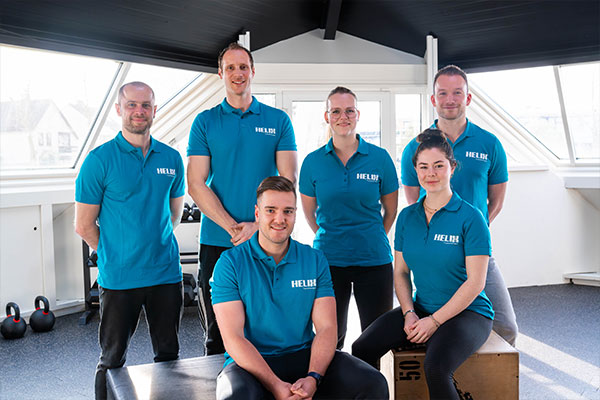
Treating an ankle injury is one thing. Ensuring that you can move, exercise, and work with confidence again requires more than just relieving pain. At Helix, we combine specialized physical therapy with active rehabilitation and personalized guidance.
- A personalized treatment plan tailored to your goals.
- Specialized knowledge of ankle and sports injuries.
- Active rehabilitation with hands-on therapy and exercise therapy.
- Training based on the principles of Frans Bosch Systems.
- Modern training facilities for safe development.
- Close collaboration with primary care physicians, sports medicine physicians, and orthopedic specialists.
- Collaboration with, among others, Amphia Hospital and Bergman Clinics.
- Focus on sustainable recovery and preventing new injuries.
1267+
Successful trajectories
97%
Customer Satisfaction
100%
Aftercare
EXPERIENCE WITH A VARIETY OF ANKLE COMPLAINTS
At Helix, we treat many people with ankle problems every year. From recreational walkers and runners to avid athletes in sports such as soccer, field hockey, tennis, padel, volleyball, and fitness. Each treatment is tailored to the individual, their sport, and the goals they want to achieve.

FREQUENTLY ASKED QUESTIONS
How do I know if my ankle ligament is torn?
A torn ankle ligament often causes pain, swelling, and sometimes bruising. The same symptoms can also occur with a severe sprain. During our examination, we assess the stability of the ankle and determine whether further testing is needed.
Can I walk with a torn ankle ligament?
Yes. Just because you can walk doesn’t automatically mean the injury isn’t serious. That’s why an accurate diagnosis is important.
How long does it take to recover from a torn ankle ligament?
On average, eight to twelve weeks. After that, additional training is often needed to fully restore strength and stability.
How long does it take to recover from a broken ankle?
On average, three to six months. After surgery, rehabilitation often takes longer.
Should I ice my ankle?
Cooling can help relieve pain, but it does not speed up recovery.
Is tape better than a brace?
That depends on the injury and the stage of recovery. Both can provide temporary support.
When can I start running again?
Only when walking is completely pain-free and strength, balance, and stability have been sufficiently restored.
Why do I keep twisting my ankle?
This is often because stability and coordination have not fully recovered following a previous injury.
When is surgery necessary?
In cases of certain ankle fractures, severe syndesmotic injuries, or chronic instability.
RELATED PAGES
- Ankle Injury – everything you need to know about ankle ligament injuries, a torn ankle ligament, and syndesmotic injuries.
- Rehabilitation After Ankle Surgery – recovery after an ankle fracture or surgery.
- Achilles Tendon Problems – pain at the back of the ankle or heel.
- Shin splints – pain in the shin while running.
- Ankle Osteoarthritis – symptoms caused by wear and tear of the ankle joint.
- Blog Post – taping the ankle.
MAKE AN APPOINTMENT
Don’t wait too long to seek help for ankle problems. During a thorough initial consultation, we’ll not only determine where the pain is located, but more importantly, what’s causing your symptoms. We’ll then create a personalized treatment plan to guide you, step by step, toward a full recovery.
Our goal isn’t just for your ankle to heal. Our goal is for you to be able to do what you love again, without any hesitation.
