

Achilles Tendon Specialist in Breda and Bavel
We'll help you walk, run, and exercise with confidence again.
- Pain in Your Achilles Tendon
- Morning stiffness
- Pain while running or jumping
- Achilles Tendonitis or Tendinopathy
- Achilles tendon rupture (torn Achilles tendon)
- Recovery after conservative treatment (i.e., non-surgical)
- Rehabilitation After Achilles Tendon Surgery
- Personalized treatment plan
Do you have pain in your Achilles tendon?
Do you wake up in the morning with a sore Achilles tendon? Do you experience pain when running, jumping, or climbing stairs? Or do you find that your symptoms keep coming back as soon as you start building up your workouts again?
Achilles tendon problems often develop gradually. Mild stiffness can progress to severe pain when walking, running, or performing daily activities. Rest alone is usually not enough. The tendon must gradually relearn how to handle stress.
At Helix Physical Therapy, we therefore look beyond just the area where it hurts. We investigate what is causing your Achilles tendon to be overloaded, how much strain the tendon can currently handle, and what you need to be able to move freely again for the long term without any worries.
We help people with overuse injuries and Achilles tendinopathy, as well as those recovering from an Achilles tendon rupture. Whether you’ve undergone conservative treatment or surgery, we’ll guide you step by step back to work, sports, and daily activities.
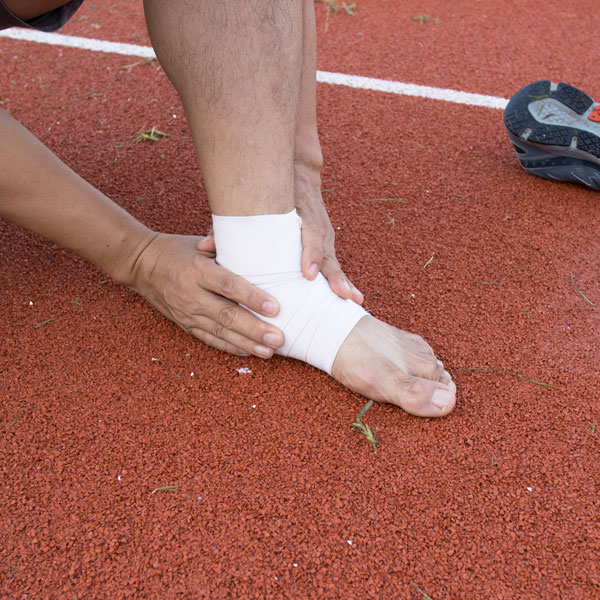
Do you recognize these Achilles tendon symptoms?
- Pain or stiffness in your Achilles tendon, especially in the morning
- Pain when taking the first steps after a rest
- Pain During or After Running
- A tender or thickened Achilles tendon
- Pain behind the heel when walking or climbing stairs
- Less power when pushing off, jumping, or accelerating
- Symptoms that temporarily subside during exercise and then return
- You felt a sudden twinge in your Achilles tendon.
- You are recovering from an Achilles tendon rupture or Achilles tendon surgery.
Are you unsure whether your symptoms are consistent with an Achilles tendon injury? During an initial consultation, we’ll assess the tendon, your activity level, and the way you move.
Why do Achilles tendon problems occur?
Achilles tendon problems usually occur when the load placed on the tendon exceeds its capacity. The Achilles tendon is subjected to more stress than it can handle at that moment and does not have enough time to adapt. Examples include:
- Building up running training too quickly
- Suddenly more sprint, jump, or hill training
- Insufficient recovery between workouts
- Reduced strength of the calf muscles
- Limited ankle mobility
- Change of shoes or surface
- Insufficient load-bearing capacity of the tendon
The Achilles tendon does not get stronger from prolonged complete rest. Recovery requires the right amount of stress at the right time.
Why Do Achilles Tendon Problems Keep Coming Back?
Many people resume exercising as soon as the pain subsides. However, the tendon’s ability to withstand stress often hasn’t fully recovered by then. In addition, calf strength may not have fully recovered, or the training load may be increased too quickly.
At Helix, we don’t just focus on pain relief. We also rebuild strength, tendon function, mobility, gait function, and coordination. This helps reduce the likelihood that your symptoms will keep coming back.
Related Ankle and Lower Leg Problems
In addition to pain in your Achilles tendon, do you have any other symptoms around your ankle or lower leg? If so, check out the following pages:
- Ankle Problems → Complete overview of ankle and lower leg problems
- Ankle Injury → caused by a sprain, ligament injury, or instability
- Shin splints → pain in the shin while running
- Rehabilitation After Ankle Surgery → Recovery after surgery
Our Approach to Achilles Tendon Issues
At Helix, we don’t believe that complete rest is the solution for Achilles tendon issues. A tendon gets stronger through the right amount of stress at the right time. Rest alone weakens a tendon. That’s why we develop a personalized treatment plan tailored to your symptoms, sport, work, and goals.
Our approach varies depending on the injury. An overused Achilles tendon requires a different rehabilitation plan than an Achilles tendon rupture. Even within the category of ruptures, we distinguish between conservative treatment and surgical repair. That’s why we tailor every rehabilitation program to your specific situation, physical capacity, and goals.
Step 1 – A Clear Diagnosis
During the initial assessment, we’ll examine your Achilles tendon, calf muscles, ankle mobility, strength, gait, and your daily activities.
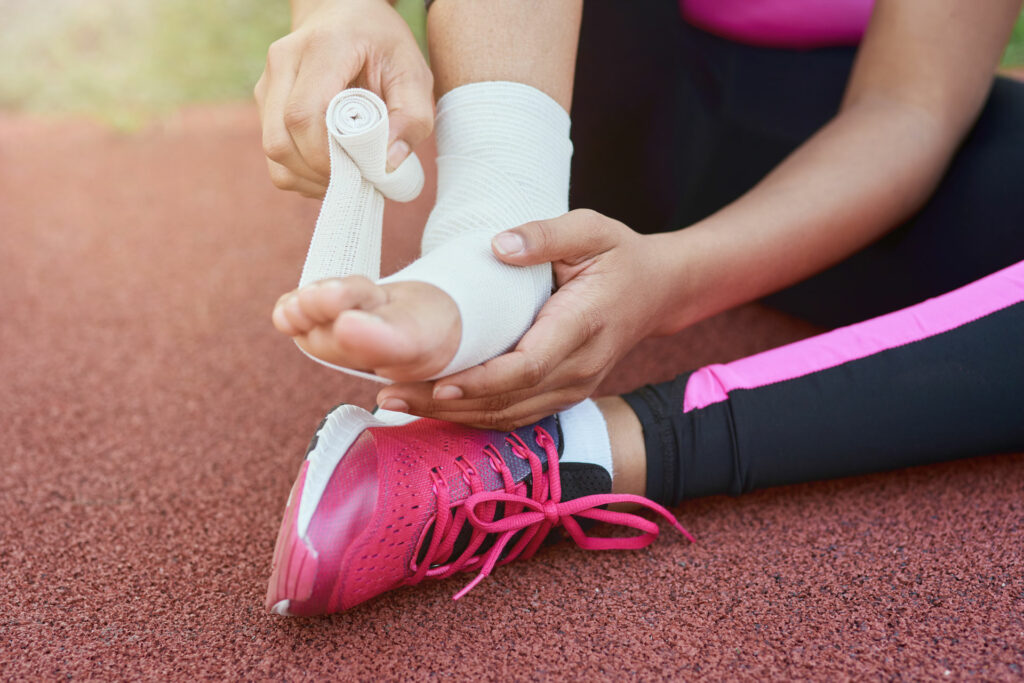
Step 2 – Finding the Right Load
We reduce tendon irritation without forcing you to stop moving unnecessarily. You can often keep moving, but in a modified way.
Step 3 – Building Strength and Endurance
Through progressive strength training, mobility exercises, and functional exercises, we gradually increase the tendon’s capacity to withstand stress.
Step 4 – Back to Your Sport
We gradually build up running, jumping, sprinting, and sport-specific movements in a controlled manner until your tendon can once again handle the desired load.
Step 5 – Sustainable Recovery
We’ll assess whether your Achilles tendon is ready for work or sports again and provide advice on how to prevent recurring symptoms.
Rehabilitation According to Frans Bosch Systems
At Helix, we apply the principles of Frans Bosch Systems. In doing so, we don’t just train the tendons, but focus primarily on the coordination between muscles, tendons, and joints during functional movements. This helps improve strength, timing, coordination, and the way your body absorbs impact while walking, running, and exercising.
Why Choose Helix?
- A personalized treatment plan tailored to your goals
- Specialized knowledge of tendon and sports injuries
- A combination of hands-on therapy and active exercise therapy
- Training based on the principles of Frans Bosch Systems
- Modern training facilities for sports rehabilitation
- Focus on sustainable recovery and the prevention of recurring symptoms
Would you like to know why your Achilles tendon issues keep coming back? Schedule an initial consultation and have your Achilles tendon thoroughly examined.
How long does recovery take?
The recovery time for Achilles tendon issues varies from person to person. Factors such as the duration of the symptoms, the severity of the strain on the tendon, your level of athletic activity, and how long you’ve had the symptoms play an important role in this. Our goal is not only to relieve the pain, but also to ensure that the tendon regains sufficient strength to handle your daily activities or sports.
Situation | Average recovery time |
Early-stage Achilles tendon symptoms | 4–8 weeks |
Chronic Achilles tendon problems | 3–6 months |
Return to Intensive Sports | 3–9 months |
What can you do on your own?
An Achilles tendon heals best when there is a good balance between exercise and rest. Complete rest is usually not necessary and may even reduce the tendon’s ability to withstand stress.
- Build up your training sessions gradually.
- Avoid large spikes in training load.
- Stay active within an acceptable pain threshold.
- Work on strengthening your calf muscles.
- Perform targeted mobility exercises for the ankle.
- Seek guidance if your symptoms keep coming back.
Not sure what level of exercise is safe for your tendon? Schedule an initial consultation and receive a personalized recovery plan.
When is it a good idea to see a physical therapist?
- The symptoms have persisted for more than two weeks.
- You always experience pain during or after running.
- The morning stiffness isn’t getting any better.
- You can no longer increase your exercise intensity.
- The complaints keep coming back.
- You have been referred for rehabilitation following an Achilles tendon rupture or Achilles tendon surgery.
The sooner the cause is addressed, the less likely your symptoms are to become long-term or chronic.
When should you contact your family doctor?
Contact your primary care physician if you’ve felt a sudden snap in your Achilles tendon, can no longer stand on your toes, or suspect a complete Achilles tendon rupture. Additional testing is also necessary in cases of severe swelling, redness, or a suspected complete tear.
Frequently Asked Questions
Is walking good for Achilles tendon problems?
Yes, provided that the exercise load is appropriate for the stage of recovery.
Can I keep running?
Often, yes, but usually with a modified training program.
Does stretching help?
Stretching can be helpful, but it is rarely the complete solution.
Is biking a good alternative?
Yes, cycling is often a good way to stay in shape while putting less strain on your tendons.
Is shockwave therapy always necessary?
No. An individual assessment determines which treatment is most appropriate.
What is the difference between Achilles tendinitis and tendinopathy?
Many long-term Achilles tendon problems are tendinopathies—that is, overuse injuries—rather than classic inflammation.
Why do my symptoms keep coming back?
This is often because the tendon has not built up sufficient strength or the training load is increasing too quickly.
When should you opt for conservative treatment of an Achilles tendon rupture?
Not every torn Achilles tendon requires surgery. Depending on the location of the tear, your age, activity level, and personal goals, conservative treatment can yield excellent results.
How long does rehabilitation take after Achilles tendon surgery?
On average, it takes 6 to 12 months before the Achilles tendon can once again withstand the full load of intense physical activity. During rehabilitation, we gradually increase the load.
Make an appointment
Don’t wait too long if you’re experiencing pain in your Achilles tendon. During a thorough initial consultation, we’ll determine the cause of your symptoms and develop a personalized treatment plan. Our goal isn’t just to relieve your pain, but to help you walk, run, and exercise again without any worries.
Schedule your initial consultation today at Helix Physical Therapy in Breda or Bavel.
Achilles Tendon Problems After an Achilles Tendon Rupture
A torn Achilles tendon (Achilles tendon rupture) is one of the most severe injuries to the ankle and lower leg. The injury often occurs during explosive movements such as sprinting, pushing off, or jumping. Many people describe it as feeling like someone kicked the back of their lower leg, followed by a sudden snap.
An Achilles tendon rupture is followed by a long-term rehabilitation process. Whether you choose conservative treatment or surgery, the goal is the same: a strong and resilient Achilles tendon that allows you to walk, work, and exercise safely again.
Recovery from an Achilles tendon rupture with conservative treatment
Not every Achilles tendon rupture requires surgery. For many people, conservative treatment can yield excellent results. With the help of a walking boot or brace, the tendon is given time to heal, after which the load is gradually increased.
During the rehabilitation , we focus on ankle mobility, calf muscle strength, and gradually increasing the tendon’s load-bearing capacity. This way, we prepare you for a safe return to daily activities and sports.
Phase | Average time |
Walking Without Assistive Devices | 8–12 weeks |
Daily Activities | 3–4 months |
Return to Sports | 6–12 months |
Achilles Tendon Rupture – Conservative Treatment | 9–12 months |
Achilles Tendon Rupture – After Surgery | 9–12 months |
Recovery After Achilles Tendon Surgery
In some cases Achilles tendon ruptures , surgery is the best option. This depends on the severity of the tear, your age, your level of athletic activity, and your personal goals. After surgery, we gradually increase the workload in a controlled manner and guide you through every phase of recovery.
We work on mobility, strength, balance, and functional exercise until you can safely walk, run, and exercise again. In doing so, we focus not only on the tendon, but on your entire kinetic chain.
Phase | Average time |
Walking Without Assistive Devices | 8–12 weeks |
Strength largely restored | 4–6 months |
Return to Sports | 6–12 months |
