

Treating Ankle Osteoarthritis in Breda and Bavel
Do you suffer from ankle osteoarthritis, a painful ankle due to wear and tear, or a stiff ankle? At Helix Physical Therapy, we’ll help you with a personalized treatment plan to reduce pain, improve the mobility of your ankle joint, and move with confidence again. Physical therapy for ankle osteoarthritis focuses on the long-term restoration of your daily functioning.
- Specialist in Ankle Problems
- Personalized treatment plan
- Locations in Breda and Bavel
- Specialist in Ankle Problems
Do these symptoms sound familiar to you?
- Pain while walking or standing for long periods
- Stiffness when taking the first steps in the morning
- Reduced ankle mobility
- Swelling after exercise
- Difficulty climbing stairs or walking
- Symptoms Following an Old Ankle Injury or Ankle Fracture
Do you recognize these symptoms? Have your ankle examined so we can determine whether ankle osteoarthritis is the cause.
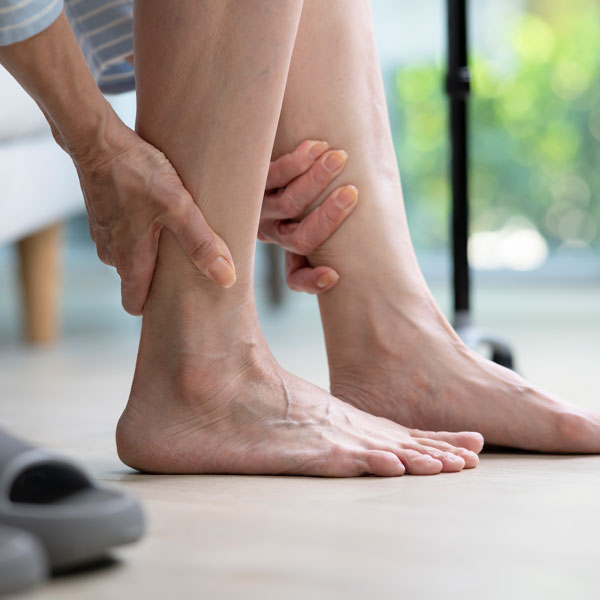
What Is Ankle Osteoarthritis (Osteoarthritis of the Ankle)?
Ankle osteoarthritis is the wear and tear of the cartilage in the ankle joint. As a result, the joint surfaces do not glide as smoothly against each other, which can lead to pain, stiffness, and loss of strength. Unlike knee or hip osteoarthritis, ankle osteoarthritis often develops following a previous ankle injury, an ankle fracture, or long-term ankle instability.
How does ankle osteoarthritis develop?
The biggest risk factor is a previous ankle injury. A torn ankle ligament, a broken ankle, cartilage damage, or previous ankle surgery can damage the cartilage. This can cause the ankle joint to wear out more quickly over time.
Why do the symptoms keep coming back?
Many people tend to move less as soon as their ankle starts to hurt. This leads to a further decline in strength, mobility, and stability, which can actually perpetuate the symptoms. At Helix, we therefore focus on active recovery and increasing the body’s capacity for physical activity.
Are you unsure about the cause of your symptoms? Schedule an appointment for a comprehensive initial consultation.
Our Approach
Every treatment is tailored to your symptoms and goals.
- Comprehensive examination of the ankle and gait pattern
- Improving Ankle Mobility
- Strength Training for the Foot, Calf, and Lower Leg
- Balance and Stability Training
- Advice on Taxes, Sports, and Footwear
- If necessary, consult with a primary care physician or orthopedic surgeon
Recovery and Prognosis
|
Situation |
Goal of Treatment |
|
Early-stage ankle osteoarthritis |
Reducing Pain and Maintaining Function |
|
Mild ankle osteoarthritis |
Improving Mobility and Physical Endurance |
|
Severe ankle osteoarthritis |
Stay active for as long as possible and postpone surgery whenever possible |
What can you do on your own?
- Keep exercising every day within your pain tolerance.
- Work on your strength and mobility.
- Wear well-fitting shoes.
- Build up your strength gradually.
- Seek guidance if your symptoms continue to worsen.
Frequently Asked Questions
Can ankle osteoarthritis be cured?
Worn cartilage does not regenerate, but physical therapy can often significantly improve pain, mobility, and function. By improving the things you can control, you take some of the strain off the cartilage. This helps you cope better with cartilage that isn’t in perfect condition.
Is walking good for ankle osteoarthritis?
Yes. Walking regularly within your pain threshold helps keep your ankle flexible.
Can I keep exercising?
That’s often the case. Together, we’ll figure out which sport and level of intensity are best suited to your situation.
When is surgery necessary?
Surgery is usually considered only when conservative treatment does not produce satisfactory results.
Does physical therapy help with ankle osteoarthritis?
Yes. Physical therapy helps improve strength, mobility, and stability, which often makes it easier to perform daily activities.
Can ankle osteoarthritis develop after an ankle fracture?
Yes. A previous ankle fracture or severe ankle injury increases the risk of osteoarthritis of the ankle.
Schedule Your Intake
Don’t put up with pain or stiffness for too long. During a thorough initial consultation, we’ll investigate the cause of your symptoms and develop a personalized treatment plan.
Schedule your initial consultation today at Helix Physical Therapy in Breda or Bavel.
Achilles Tendon Problems After an Achilles Tendon Rupture
A torn Achilles tendon (Achilles tendon rupture) is one of the most severe injuries to the ankle and lower leg. The injury often occurs during explosive movements such as sprinting, pushing off, or jumping. Many people describe it as feeling like someone kicked the back of their lower leg, followed by a sudden snap.
An Achilles tendon rupture is followed by a long-term rehabilitation process. Whether you choose conservative treatment or surgery, the goal is the same: a strong and resilient Achilles tendon that allows you to walk, work, and exercise safely again.
Recovery from an Achilles tendon rupture with conservative treatment
Not every Achilles tendon rupture requires surgery. For many people, conservative treatment can yield excellent results. With the help of a walking boot or brace, the tendon is given a chance to heal, after which the load is gradually increased.
During the rehabilitation , we focus on ankle mobility, calf muscle strength, and gradually increasing the tendon’s load-bearing capacity. This way, we prepare you for a safe return to daily activities and sports.
Phase | Average time |
Walking Without Assistive Devices | 8–12 weeks |
Daily Activities | 3–4 months |
Return to Sports | 6–12 months |
Achilles Tendon Rupture – Conservative Treatment | 9–12 months |
Achilles Tendon Rupture – After Surgery | 9–12 months |
Recovery After Achilles Tendon Surgery
In some cases Achilles tendon ruptures , surgery is the best option. This depends on the severity of the tear, your age, your level of athletic activity, and your personal goals. After surgery, we gradually increase the workload in a controlled manner and guide you through every phase of recovery.
We work on mobility, strength, balance, and functional exercise until you can safely walk, run, and exercise again. In doing so, we focus not only on the tendon but on your entire kinetic chain.
Phase | Average time |
Walking Without Assistive Devices | 8–12 weeks |
Strength largely restored | 4–6 months |
Return to Sports | 6–12 months |
